How to Use Hessian Cloth for Concrete Curing in India: Site Method, Moisture Retention & Coverage Guide
Proper moisture management during the early days after pouring concrete directly determines slab strength and surface durability. Here is how site engineers and civil contractors use natural jute Hessian cloth (also called Hassion cloth, Hession cloth, or burlap fabric) to prevent rapid drying and plastic shrinkage cracks.
01.
Why Natural Jute Hessian Cloth Works for Concrete Curing
Concrete does not gain strength simply by drying—it gains strength through cement hydration, a chemical reaction that requires sustained moisture inside the concrete matrix. Under Indian ambient temperatures and dry site winds, exposed slabs and columns lose surface water rapidly, leading to dusty finishes, surface crazing, and structural shrinkage cracks.
Woven from natural bast jute fibres, Hessian cloth acts as a breathable moisture reservoir. When soaked and placed over green concrete, the coarse plain weave absorbs and holds water close to the concrete face while blocking direct solar radiation and hot cross-winds. Unlike non-absorbent plastic sheets that can pool water unevenly or trap heat without holding moisture on vertical columns, natural jute fabric conforms cleanly around beams, piers, lintels, and uneven slab edges.
02.
Step-by-Step Concrete Curing Method on Site
Following a disciplined placement sequence helps crews get uniform hydration without damaging the trowelled finish:
-
1. Pre-Wet the Hessian Cloth Before Laying
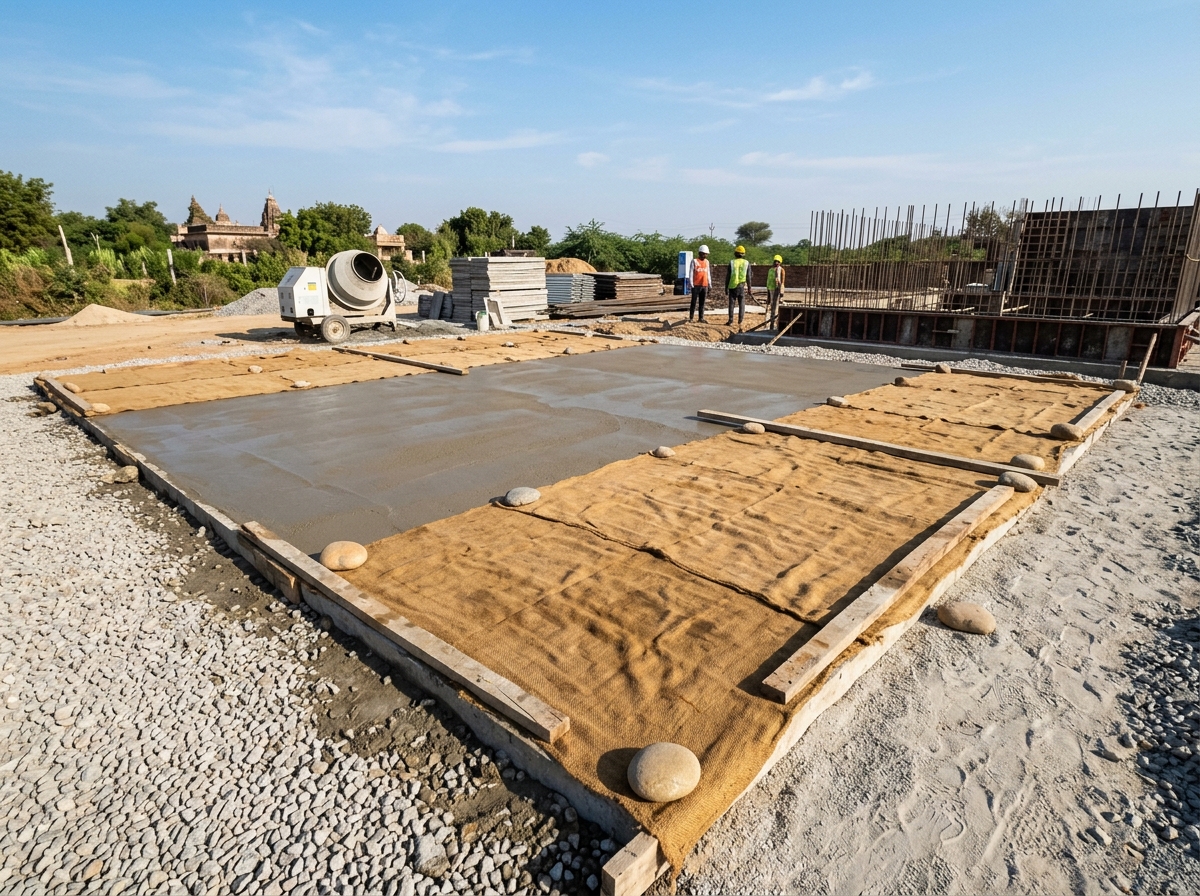
Never spread dry jute Hessian cloth directly over freshly poured concrete. Dry jute fibres aggressively wick mixing water out of the surface paste. Always soak the strips in clean water drums or spray them down thoroughly until evenly damp before laying.
-
2. Wait for Initial Surface Set
Place the damp cloth as soon as the concrete surface has hardened sufficiently to carry the fabric without leaving weave marks or disturbing finished levels.
-
3. Overlap Adjacent Strips by 10 to 15 cm
Butt-jointed strips often shrink or shift in wind, exposing narrow bands of concrete that crack first. Always overlap adjoining sheets by at least 10–15 cm and weigh down slab perimeters with clean battens or sandbags.
-
4. Keep the Fabric Continuously Damp
Sprinkle water gently over the Hessian cloth at regular intervals throughout the day so it never dries out completely. During hot summer afternoons or high-wind exposures on upper floors, increase watering frequency or apply a double layer for stronger moisture retention.
-
5. Wrap Columns & Beams Immediately After Deshuttering
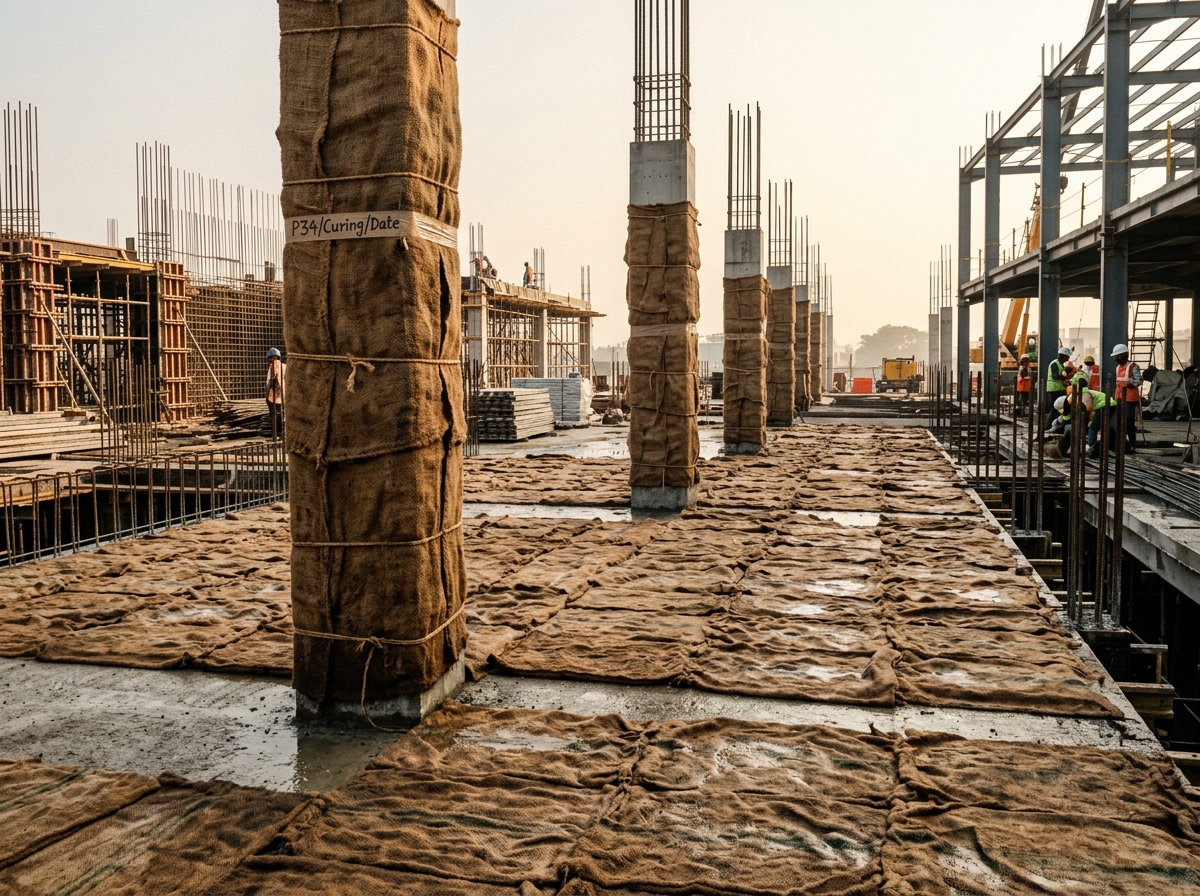
Ponding is impossible on vertical members. As soon as shuttering is stripped, wrap damp Hessian cloth or jute curing gunny bags snugly around columns, pillars, shear walls, and beams, tying them securely with jute sutali or binding wire so water trickles evenly down the face during each sprinkle.
03.
Site Coverage, Layering & Overlap Planning Guide
When calculating Hessian cloth quantities for an active civil project, ordering exact net slab area almost always leaves crews short due to seam overlaps, column wrapping, and trim cuts. Use these practical site planning allowances:
| Structural Element | Typical Layers | Overlap Allowance | Site Practice |
|---|---|---|---|
| Roof & Floor Slabs | 1–2 Layers | 10% | Overlap edges and anchor against wind |
| Columns & Piers | 1–2 Layers | 15% | Spiral wrap tightly and tie at intervals |
| Beams & Lintels | 1 Layer | 10–15% | Drape over sides and underside soffits |
| Precast & Paving | 1 Layer | 5–10% | Keep damp across entire casting bed |
BUNDLE ESTIMATION TOOL
Calculate Your Exact Curing Yards & Bundles
Need to convert your slab or column area into exact Small Bundles (150 yards) or Large Bundles (2,000 yards)? Use our free Hessian Cloth Calculator to add layer count and overlap allowance, then send the requirement straight to WhatsApp.
04.
Common Concrete Curing Mistakes to Avoid
- Allowing wet-dry cycling: Letting Hessian cloth bake bone-dry between sprinkles subjects fresh concrete to repeated thermal and moisture shock. Consistent dampness matters far more than occasional flooding.
- Leaving exposed seams or edges: Corners, column junctions, and slab perimeters dry fastest. Ensure sheets extend slightly beyond slab edges and overlap firmly along every seam.
- Using contaminated or oily cloths: Reusing fabric stained with shuttering oil, grease, or chemicals can discolour architectural concrete or interfere with subsequent plaster bonding.
- Under-ordering for staggered pours: Active multi-floor builds cure multiple bays simultaneously. Planning total running yards upfront avoids stripping curing cloth early from an earlier pour just to cover a fresh slab.
05.
Care, Reuse & Site Storage Tips
Natural jute Hessian cloth can be reused across successive curing cycles on the same project when handled cleanly. After curing completes, rinse off loose cement dust, hang the sheets until thoroughly dry, and fold them inside a shaded, ventilated store room away from standing ground water. Proper drying prevents mildew and preserves yarn strength for the next slab or column schedule.
DIRECT SITE SUPPLY · PAN-INDIA
Need Hessian Cloth or Gunny Bags for Concrete Curing?
Alongside Small Bundles (150 yards) and Large Bundles (2,000 yards) of Hessian cloth, we also supply jute gunny bags for floor, pillar, column, and road curing. Share your site requirement and delivery city directly with Reliable Industrial for availability and a quotation.